
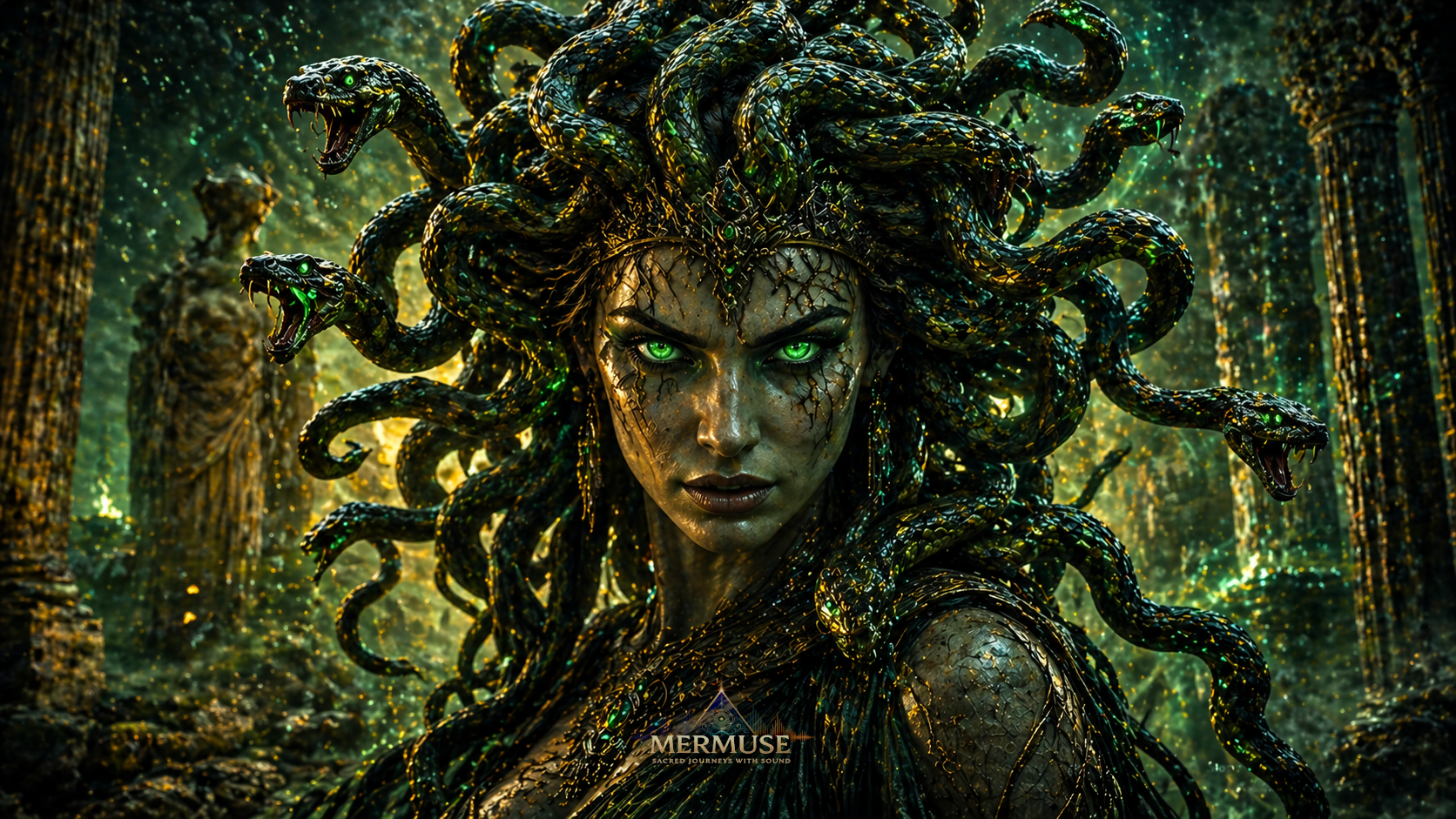
Medusa
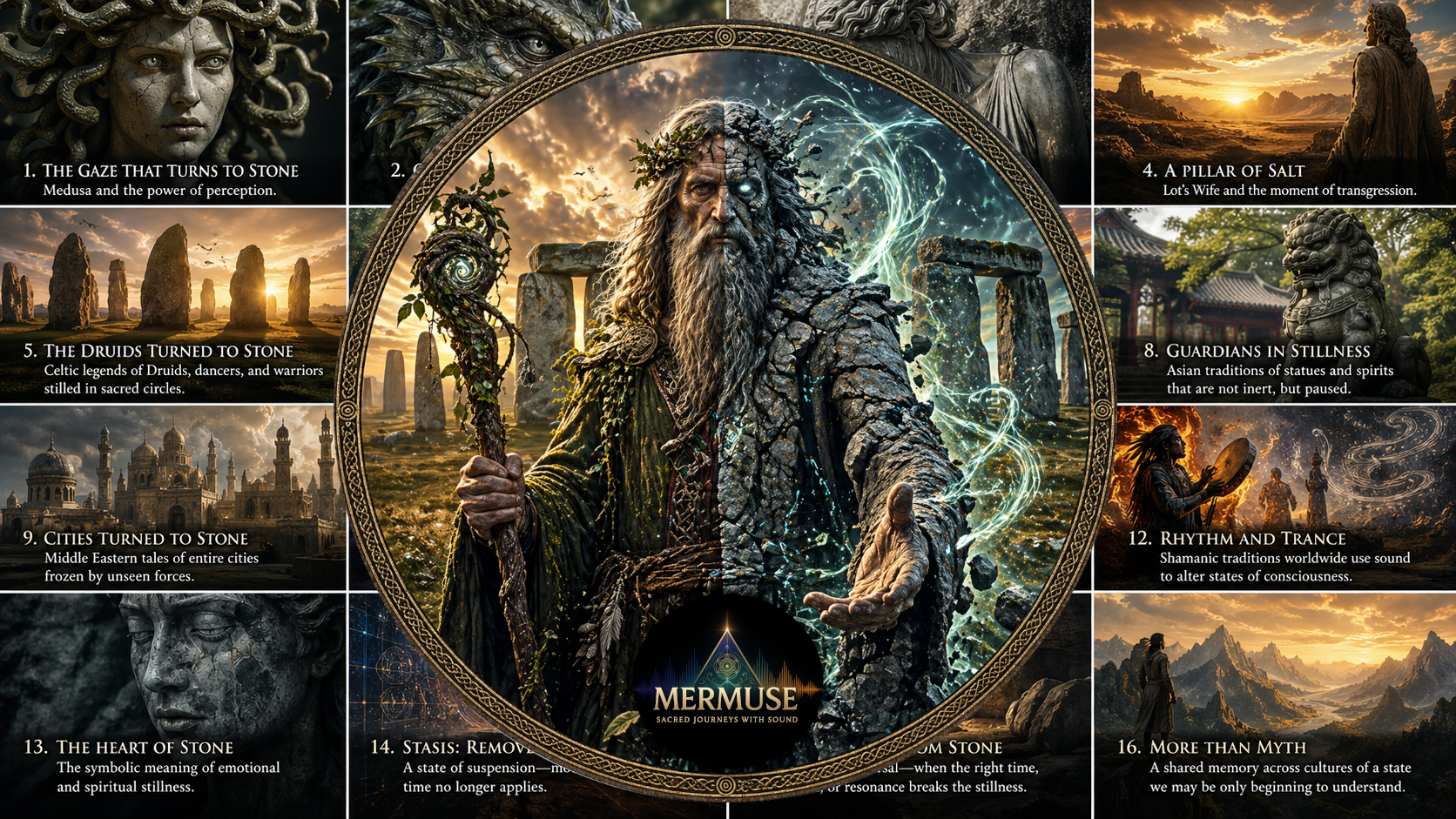
Across cultures, languages, and time periods, the idea of being “turned to stone” appears with striking consistency. In Greek mythology, the gaze of Medusa freezes living beings into lifeless statues. In medieval European lore, the Basilisk carries a similar power; its mere glance enough to petrify. In the Hebrew tradition, Lot's Wife becomes a pillar of salt, fixed forever in a single moment. And in the story of Niobe, grief itself becomes stone, yet something of her remains, weeping eternally from within.
These are not isolated myths. They echo across the world.
In European and Celtic traditions, entire fields of standing stones are said to be Druids, warriors, or dancers caught in a moment and fixed into the land.
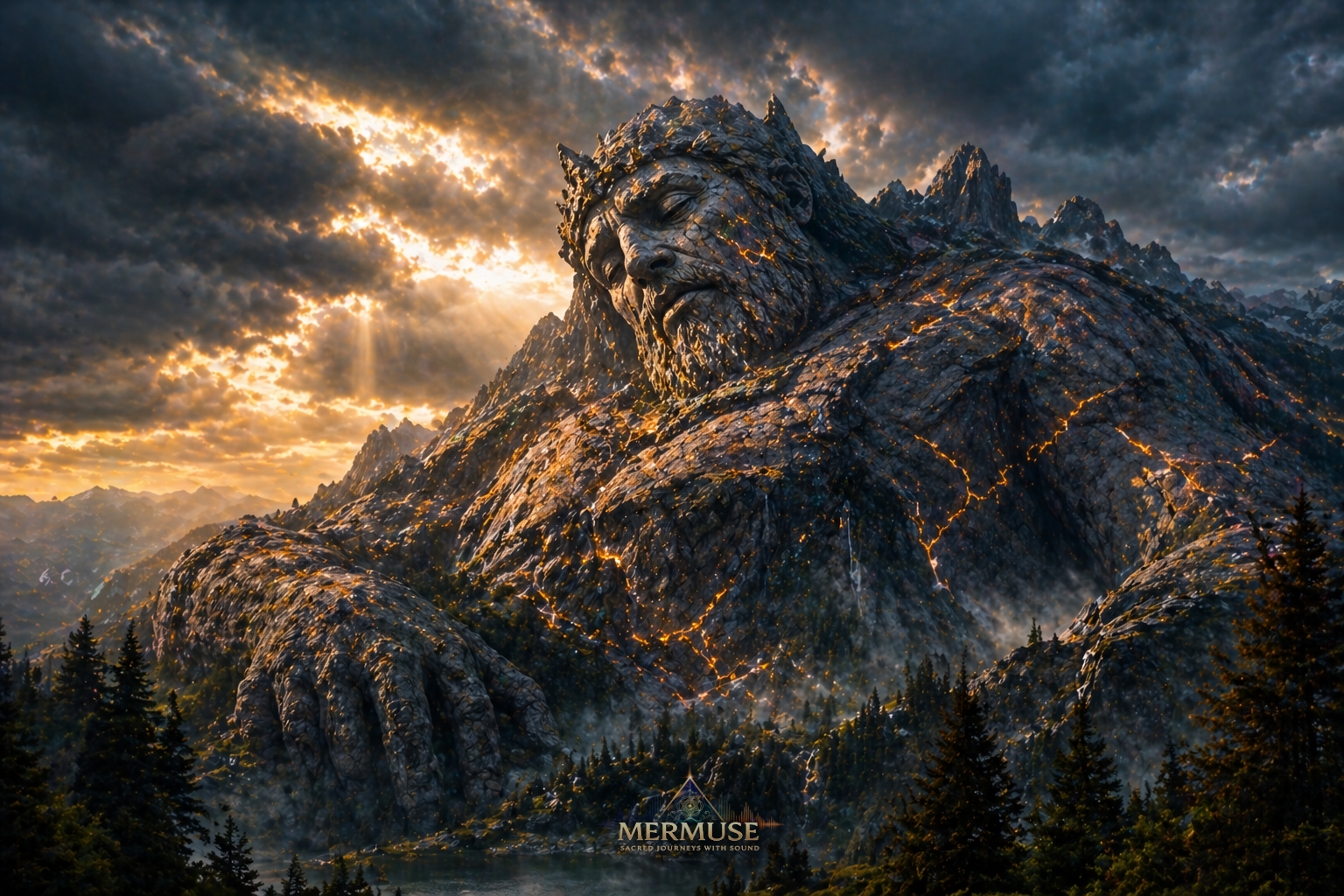
Stone Giant in the Mountain
Legends surrounding stone circles speak of beings who were stilled, not destroyed, and held in place as if time itself stopped around them. In Indigenous North American traditions, stories of “stone people” describe ancestors or beings who became part of the earth yet remain present, aware, and watchful.
In parts of Asia, temple statues and guardians are sometimes believed to hold a living essence; not dead, but paused, existing in a state between form and awareness.
In Middle Eastern lore, especially in tales like One Thousand and One Nights, entire individuals and even cities are turned to stone and later restored, as if the condition itself were not an ending, but a locked state awaiting release.
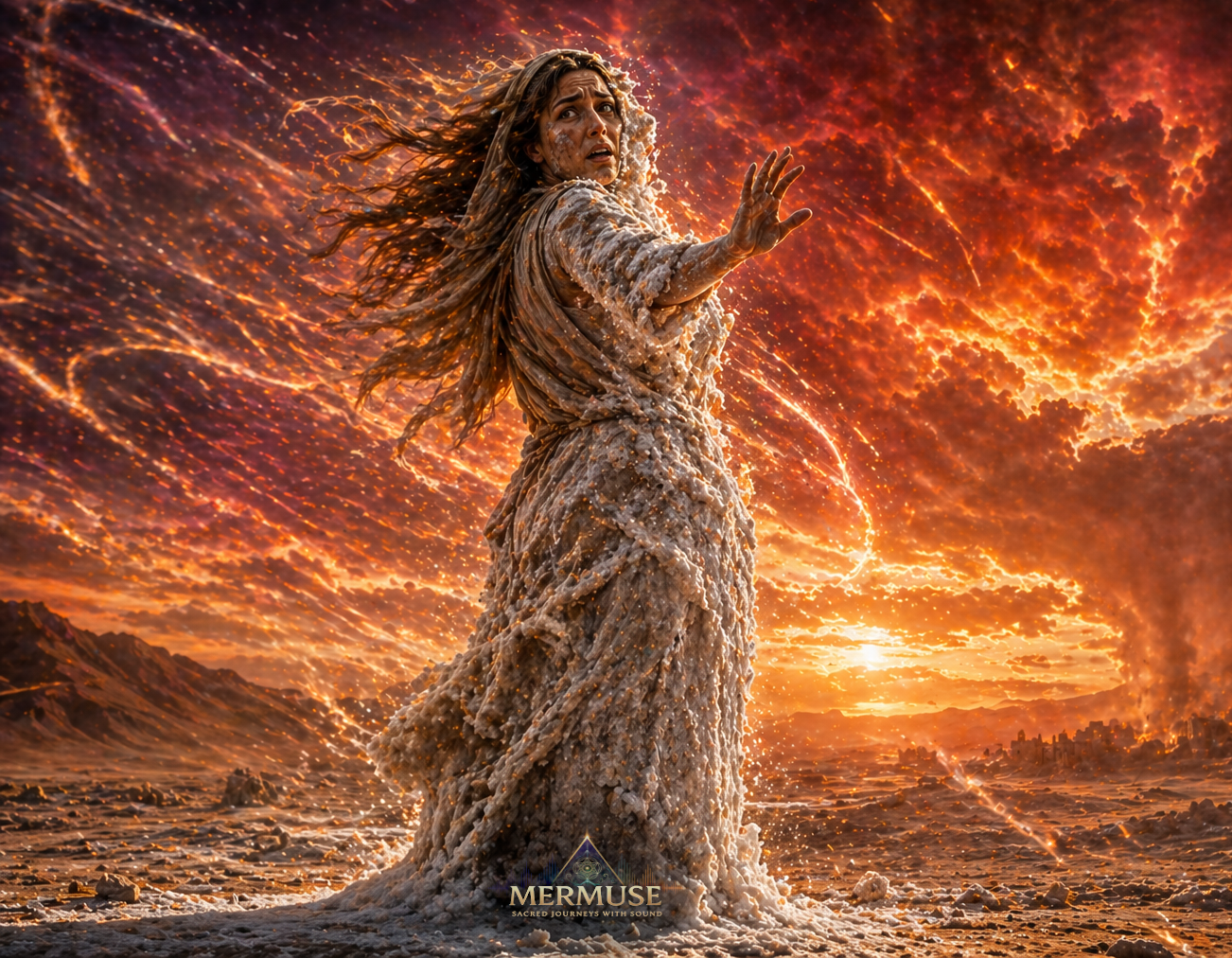
Lot’s wife turning into“Pillar of Salt”
At first glance, the meaning seems literal: flesh becomes mineral. Life becomes rock. But when you look closer, the consistency across cultures suggests something deeper. “Stone” is not just a substance, it is a condition. Something un-moving. Unchanging. Removed from the normal flow of life and time.
And the way this transformation occurs is just as revealing.
It is rarely through force. Rarely through physical contact. Again and again, the trigger is perception.
A gaze. A glance. To look upon Medusa is to be fixed instantly, as if the act of seeing itself initiates the change. Reflection becomes protection; not armor, not distance, but altered perception. It is as if direct visual contact completes a circuit, while indirect viewing breaks it. Across traditions, to witness something overwhelming, divine, or forbidden is to be fundamentally altered and sometimes frozen in that moment forever.
In other traditions, the mechanism shifts from sight to sound.
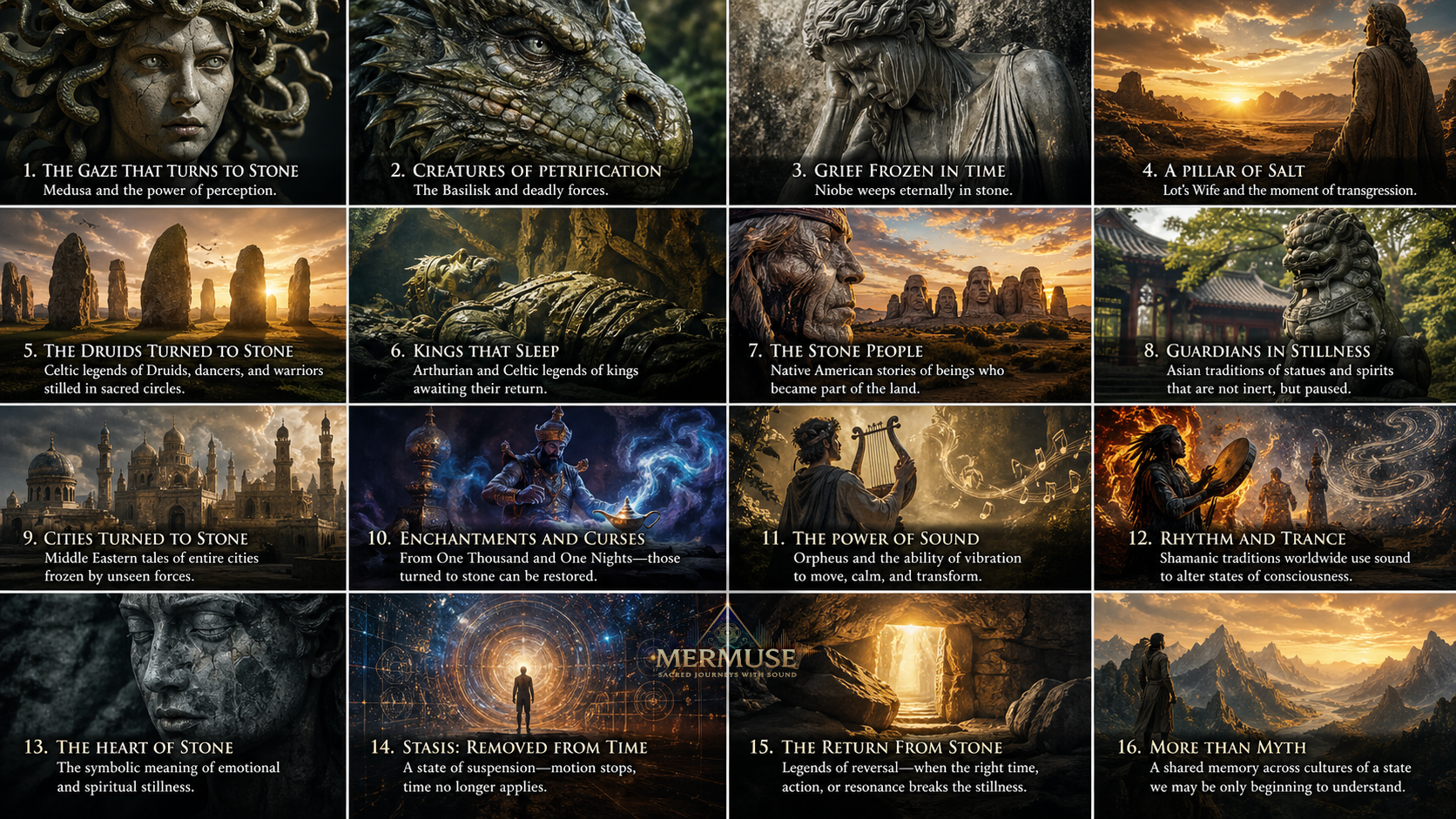
Figures like Orpheus do not merely create music, they alter reality through it. Stones move. Creatures become still. The environment responds. Sirens immobilize through song. Across shamanic traditions in the Americas and Siberia, rhythm and resonance are used to induce trance states where the body becomes motionless, suspended between awareness and action. Sound is not entertainment, it is influence, control, and transformation of state.
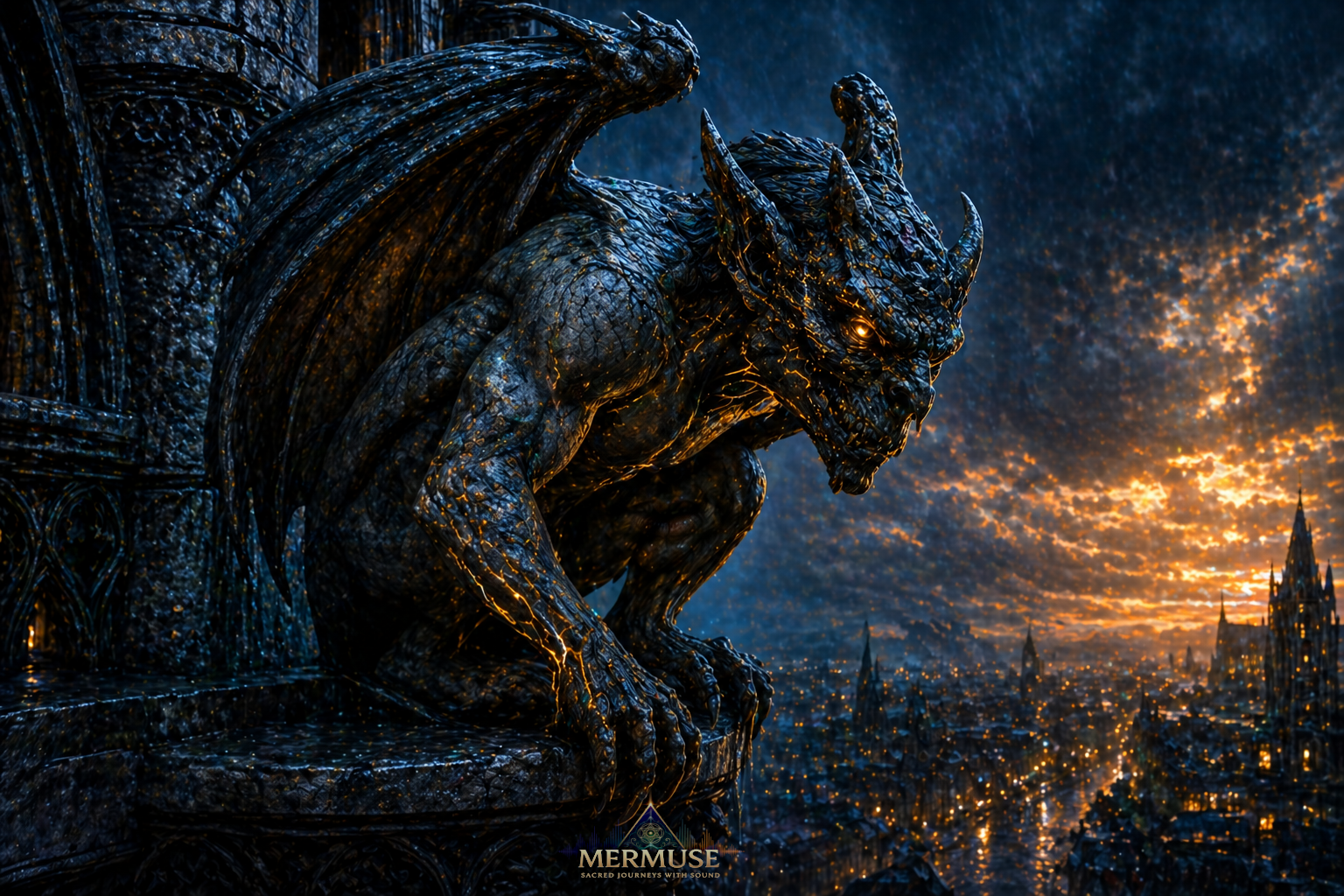
Gargoyle Gaurdian
Now place these patterns side by side:
A gaze that initiates.
A sound that induces.
A body that becomes still.
And a result described, again and again, as stone.
But then comes the most important layer, the one often overlooked.
Not all who are turned to stone are gone.
In Celtic and Arthurian traditions, kings and warriors sleep beneath mountains, preserved until the moment they are needed again. In Druidic lore, stone circles are not merely monuments, they are moments held in place, gatherings that never ended, bodies that never moved again. In Indigenous traditions, those who became stone remain part of the land, still present in a way that defies ordinary definitions of life and death. In Middle Eastern and European folklore, those turned to stone can sometimes be restored and released when the right condition is met, the right time arrives, or the right action is taken.
This changes everything.
Because if “stone” were simply death, there would be no return.
But if “stone” represents a state, then it can be entered… and exited.
What these traditions begin to describe, collectively, is not destruction, but containment. A being is not erased, but placed into a condition where motion stops, change ceases, and time (at least from their perspective) no longer applies. A suspension. A stillness so complete that the only comparison available was stone.
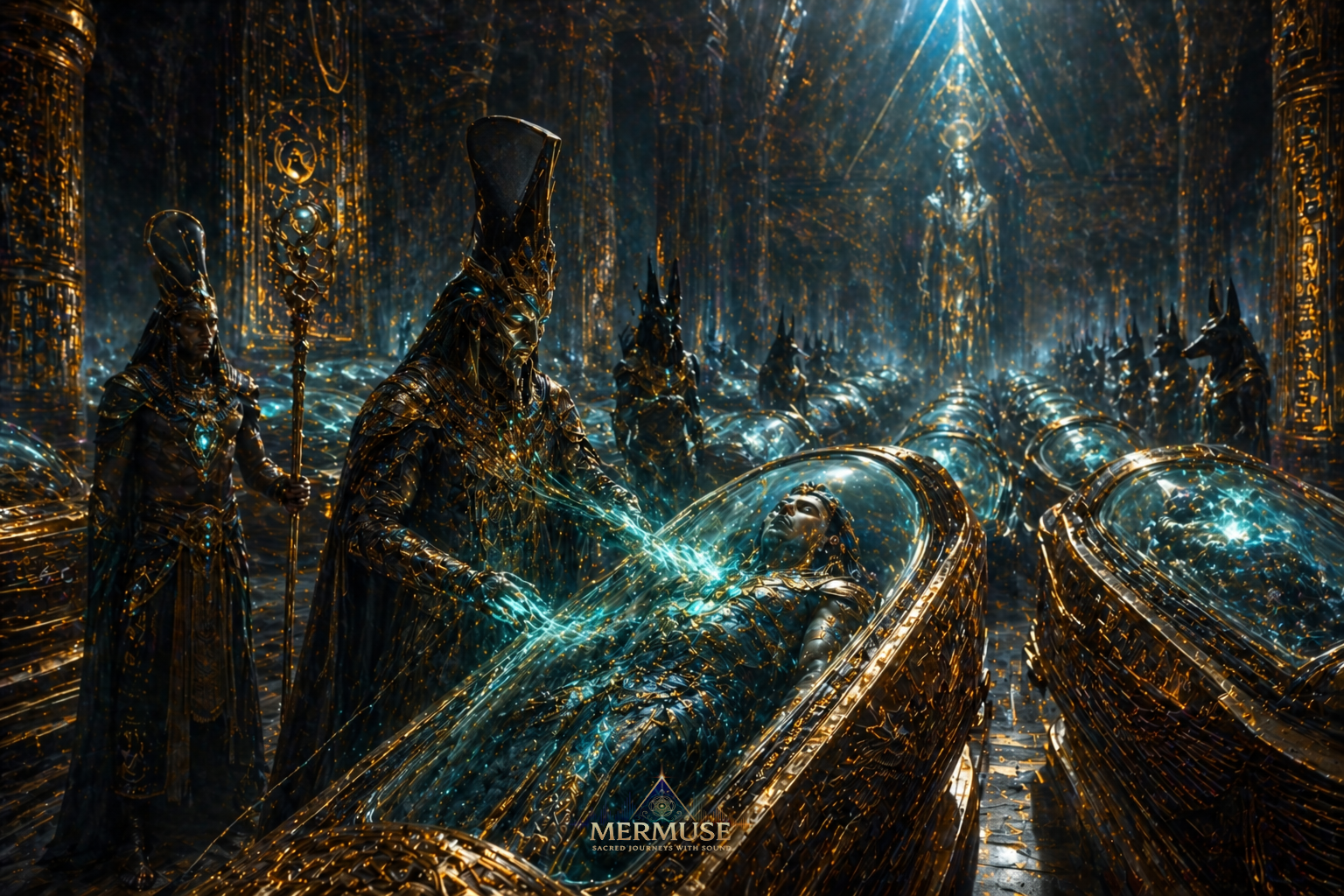
The Ancient Ones, stasis chamber
Even metaphor reinforces this idea. A “heart of stone” does not respond. It does not change. It is fixed. Across literal, symbolic, and mythological uses, the meaning converges: stone is what happens when something is no longer participating in the flow of life.
So what if all of these stories across Greece, Europe, the Middle East, Asia, Indigenous America, and the Druidic traditions are describing the same underlying phenomenon, translated through different symbolic languages?
A state triggered by perception.
A state induced by vibration.
A state resulting in total stillness.
Sometimes permanent.
Sometimes reversible.
Always profound.
In a world without modern terminology for fields, frequencies, or altered states of matter, “stone” may have been the closest word available. Not because everything literally became rock, but because rock was the closest observable analogy: something once living, now completely still, preserved, and unreachable.
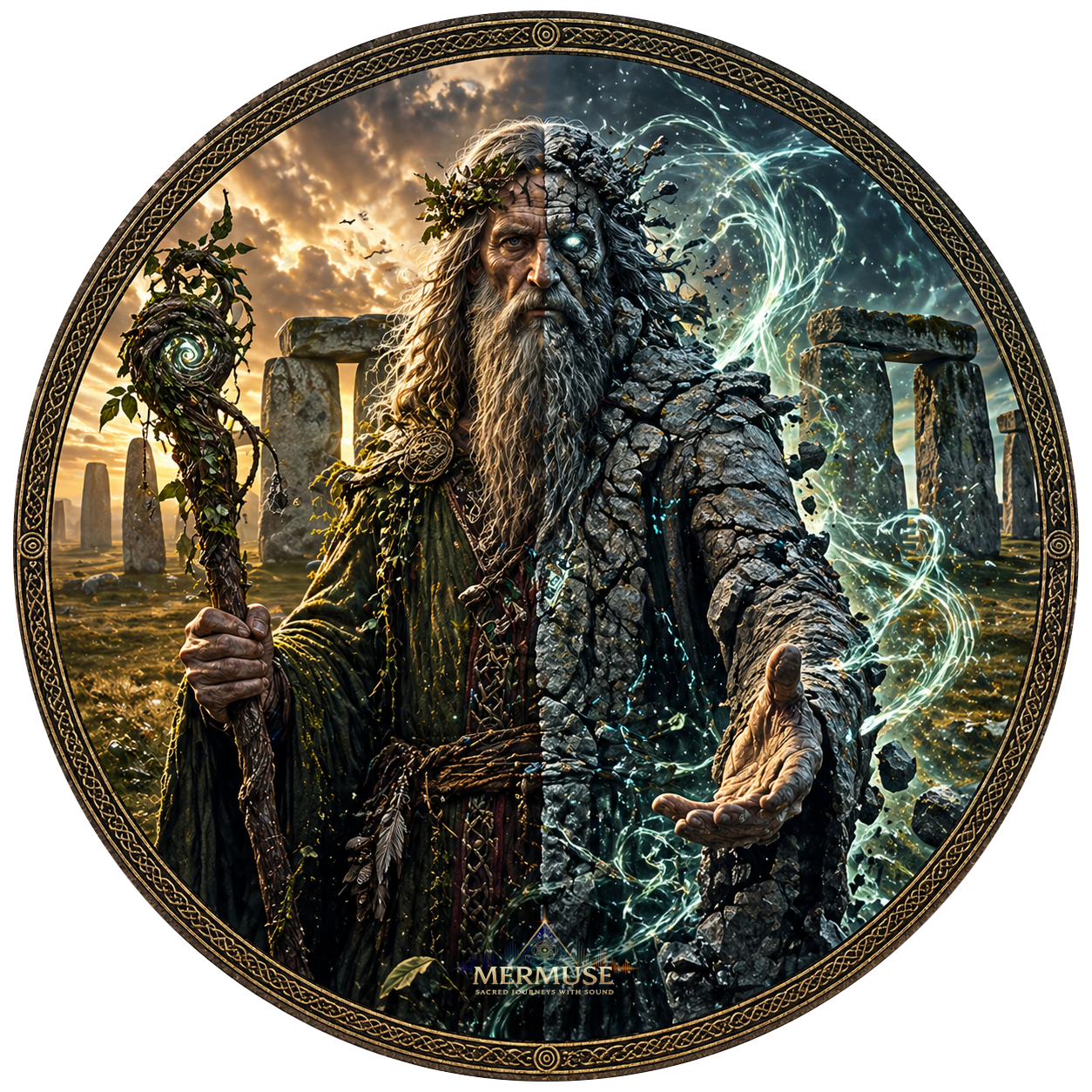
…And The Druids Turned to Stone
And maybe that is the thread running through all of it.
Not stone as material,
but stone as state.
A gaze that initiates it.
A sound that induces it.
A condition that holds it.
And sometimes… a way back.
Perhaps the Druids didn’t simply turn to stone.
Perhaps they were held there.
Sources And Further Readings
Metamorphoses - Ovid
The Library of Greek Mythology - Pseudo-Apollodorus
Book of Genesis
One Thousand and One Nights
The Mabinogion
The Druids - Peter Berresford Ellis
American Indian Myths and Legends - Richard Erdoes & Alfonso Ortiz
Strange Tales from a Chinese Studio - Pu Songling
The Power of Myth - Joseph Campbell
