

The Giza Plateau, a desert shelf west of Cairo, is globally renowned for the triad of colossal pyramids and the enigmatic Sphinx that have stood for millennia as symbols of Egypt's grandeur. Yet, beyond these iconic monuments lies a rich tapestry of lesser-known structures, cartographic anomalies, and historical testimonies that suggest Giza once held more than we now see.
One of the most persistent legends surrounding Giza involves the existence of a fourth pyramid. This idea stems primarily from the 1755 publication "Voyage d’Egypte et de Nubie" by Danish naval captain Frederic Norden. In his detailed drawings and descriptions, Norden clearly depicts and discusses a fourth pyramid made from a darker stone, possibly basalt or black granite, situated southwest of the Pyramid of Menkaure.
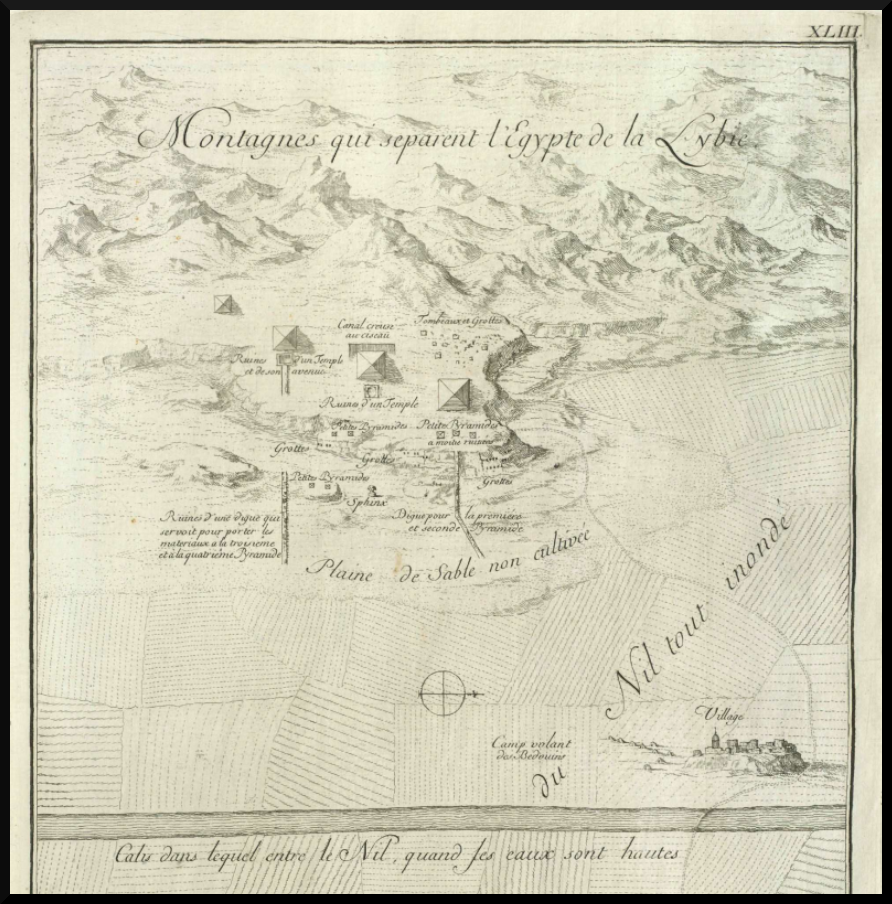
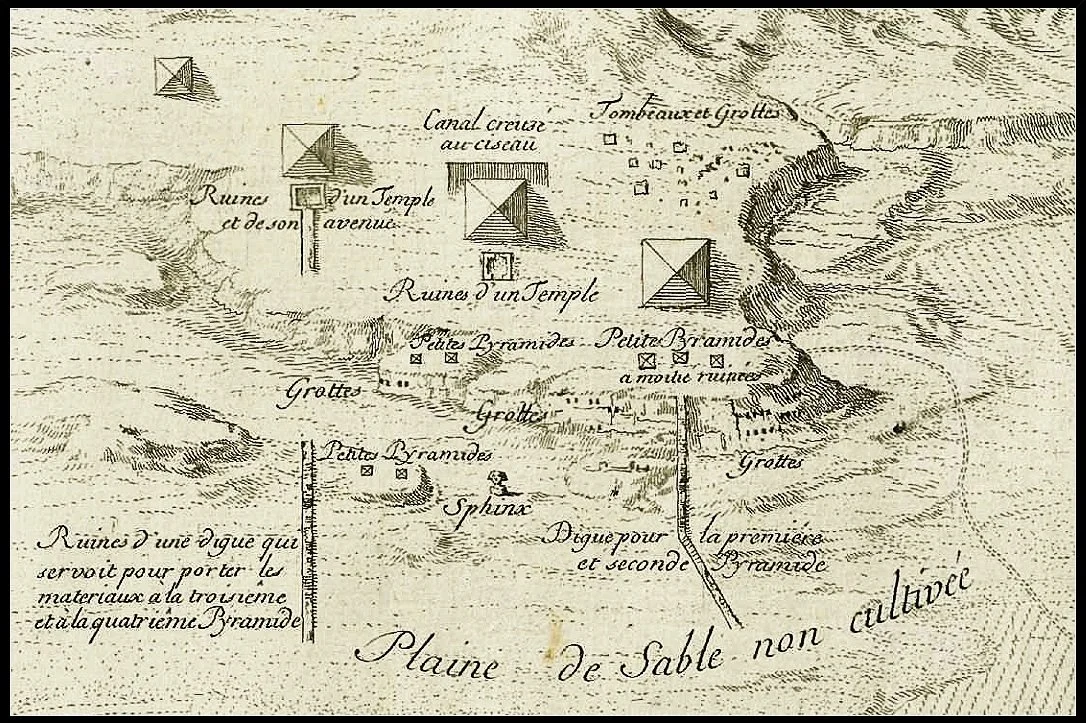
(A closer look in the above image clearly shows 4 large pyramids on the plateau & other interesting anomalies including a half buried Sphinx)
He describes it as smaller than the others, but geometrically consistent and architecturally sound. Some theorists argue that this edifice may have been dismantled, buried, or erased from public knowledge over time. Critics claim Norden may have confused it with one of the smaller queens' pyramids or a mastaba, yet his sketches clearly point out the smaller satellite pyramids and the fourth is of comparable size to the other three.
The idea of additional, unacknowledged temples on the Giza Plateau also surfaces in historical and esoteric accounts. A number of 19th-century explorers, such as Sir Richard Francis Burton and Giovanni Battista Belzoni, documented ruins or anomalies that don’t match current site maps. These include references to stone platforms, aligned entryways, or vestiges of once-prominent temples which may have eroded or been buried by sand and time. Modern Egyptology focuses primarily on the documented valley and mortuary temples associated with each pyramid, notably the Khafre Valley Temple and the Sphinx Temple, yet these accounts hint at a more elaborate sacred complex.
Adding further intrigue, the Giza Plateau Mapping Project (GPMP), headed by Egyptologist Mark Lehner, has uncovered numerous architectural and urban planning features beneath and around the plateau. These include worker villages, infrastructure, and subterranean anomalies. Although none of these discoveries have yet confirmed the presence of a hidden temple or fourth pyramid, they underscore how much remains concealed beneath the desert's surface.
(Addendum 2025, S.A.R. and The Khafre Project have revealed much more hidden under the plateau aligning with Ancient rumors of a Hall of Records)
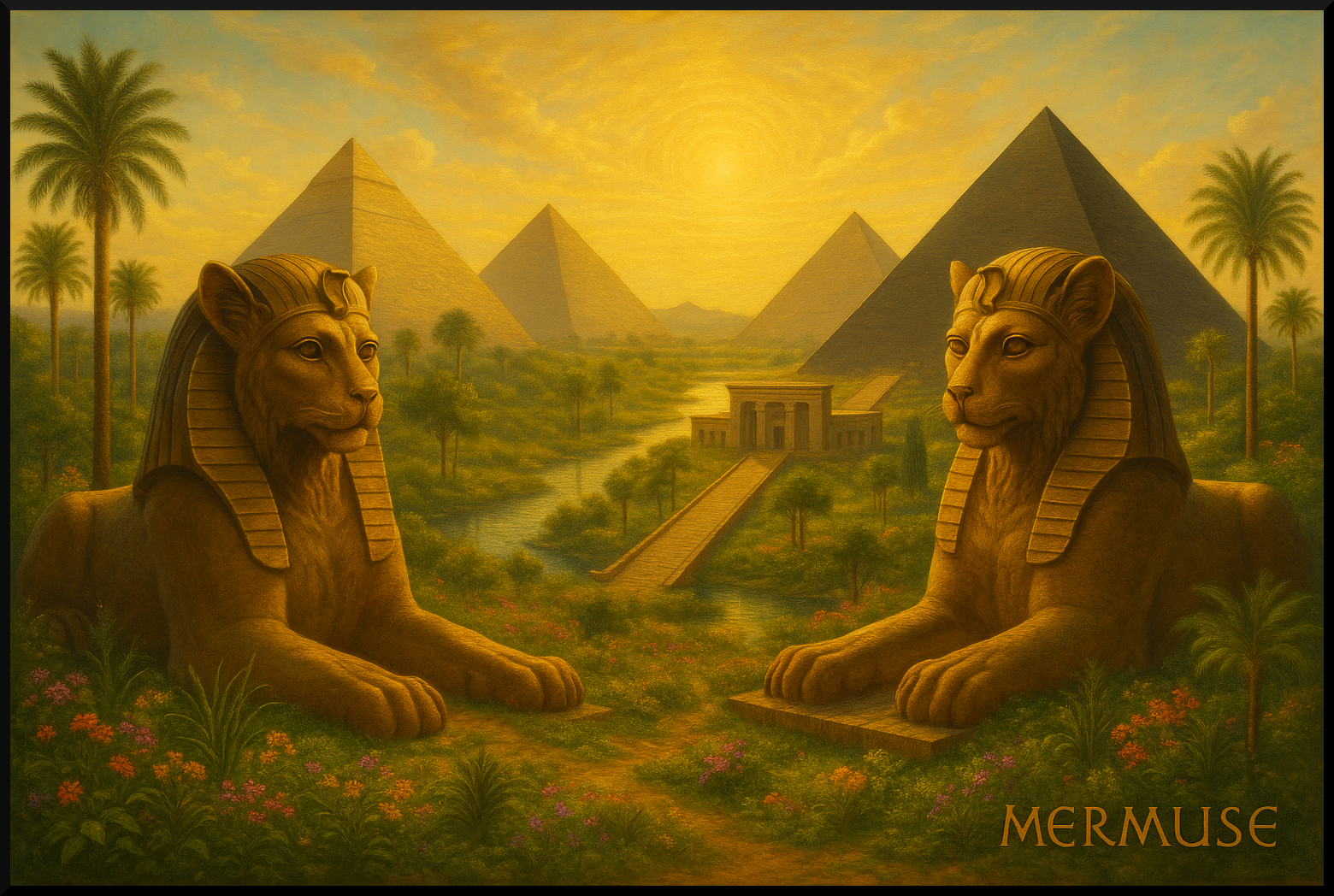
Another legend persistent in both oral tradition and symbolic lore is the existence of a second Sphinx. Rooted in the ancient Egyptian concept of duality and embodied in the Aker Lions who guard the horizon, this theory posits that the Sphinx was originally part of a pair. Supporters of this theory reference not only symbolic sources but also old maps and 18th- and 19th-century artistic renderings that depict twin guardian figures. Despite these depictions, remnants of a second Sphinx have not yet been found.
Among old documents, several schematics and maps from early French and British expeditions depict geometric layouts of the Giza Plateau that include unfamiliar rectangular or circular platforms. While many are dismissed as artistic embellishments or mapping errors, a few align intriguingly with modern satellite images showing subsurface anomalies.
In modern times, satellite photography and ground-penetrating radar have further fueled speculation. Digital overlays of the Giza Plateau reveal geometric formations beneath the sand in areas not yet excavated or officially surveyed. These technological tools offer tantalizing hints of long-buried architecture that could support older claims of lost temples and monuments.
Ultimately, while mainstream archaeology holds fast to the triadic pyramid narrative, the blend of historical testimony, symbolic tradition, and modern technology paints a more complex picture of Giza’s ancient past. Whether the fourth pyramid, second sphinx, or lost temples will ever be conclusively uncovered remains uncertain. But the persistence of these legends and the mounting clues suggest that Giza still guards secrets yet to be revealed.

Sources and further readings
Norden, Frederic. Voyage d’Egypte et de Nubie, 1755.
Lehner, Mark. The Complete Pyramids, Thames & Hudson, 1997.
Giza Plateau Mapping Project (AERA): https://aeraweb.org
Belzoni, Giovanni. Narrative of the Operations and Recent Discoveries within the Pyramids, 1820.
Schematic Map of the Giza Necropolis: ResearchGate publication (various diagrams and overlays).
Ancient Egyptian symbology regarding the Aker Lions and solar duality traditions.